
Mild steel · 3mm Forming & tapping Pre-painted OK

CNC punching,
made in Bolton.

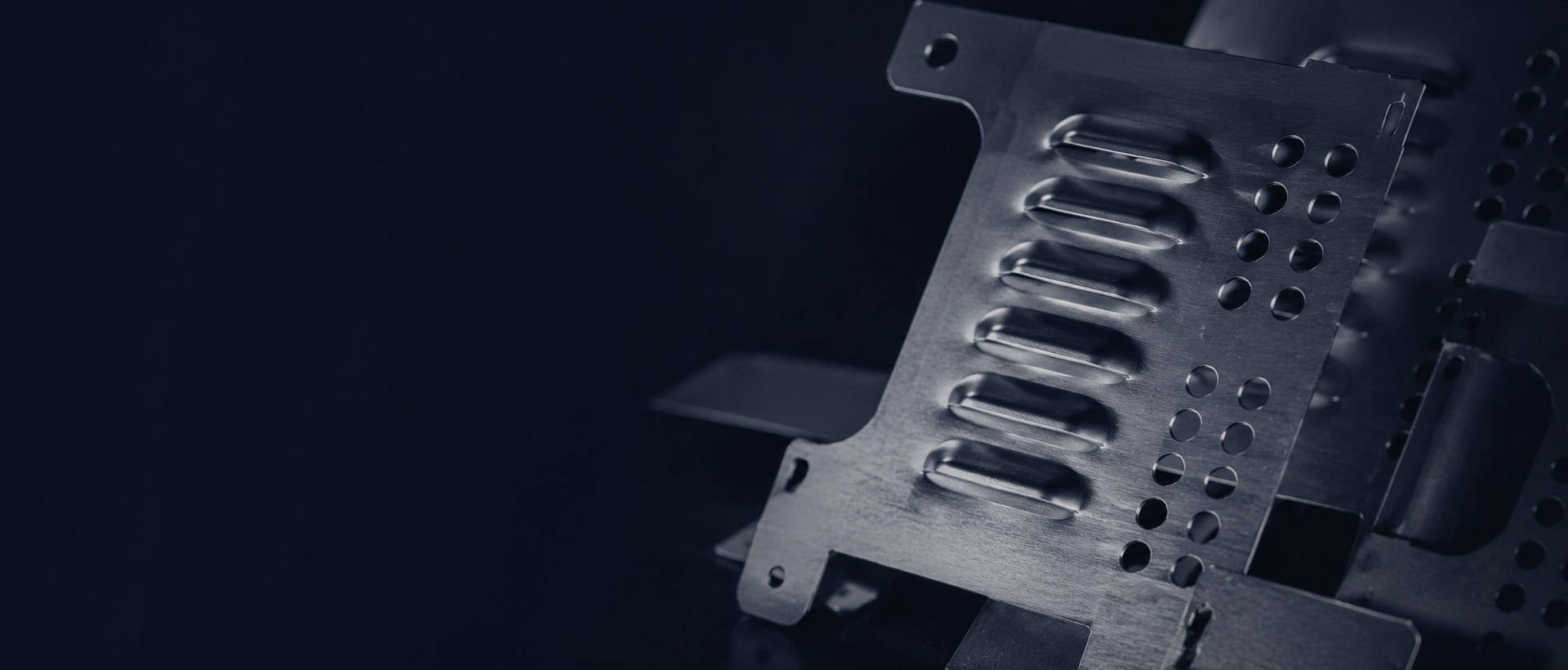
Turret punching for the work the laser can't do — louvres, dimples, countersinks, tapped threads and pre-painted material, all in one operation.

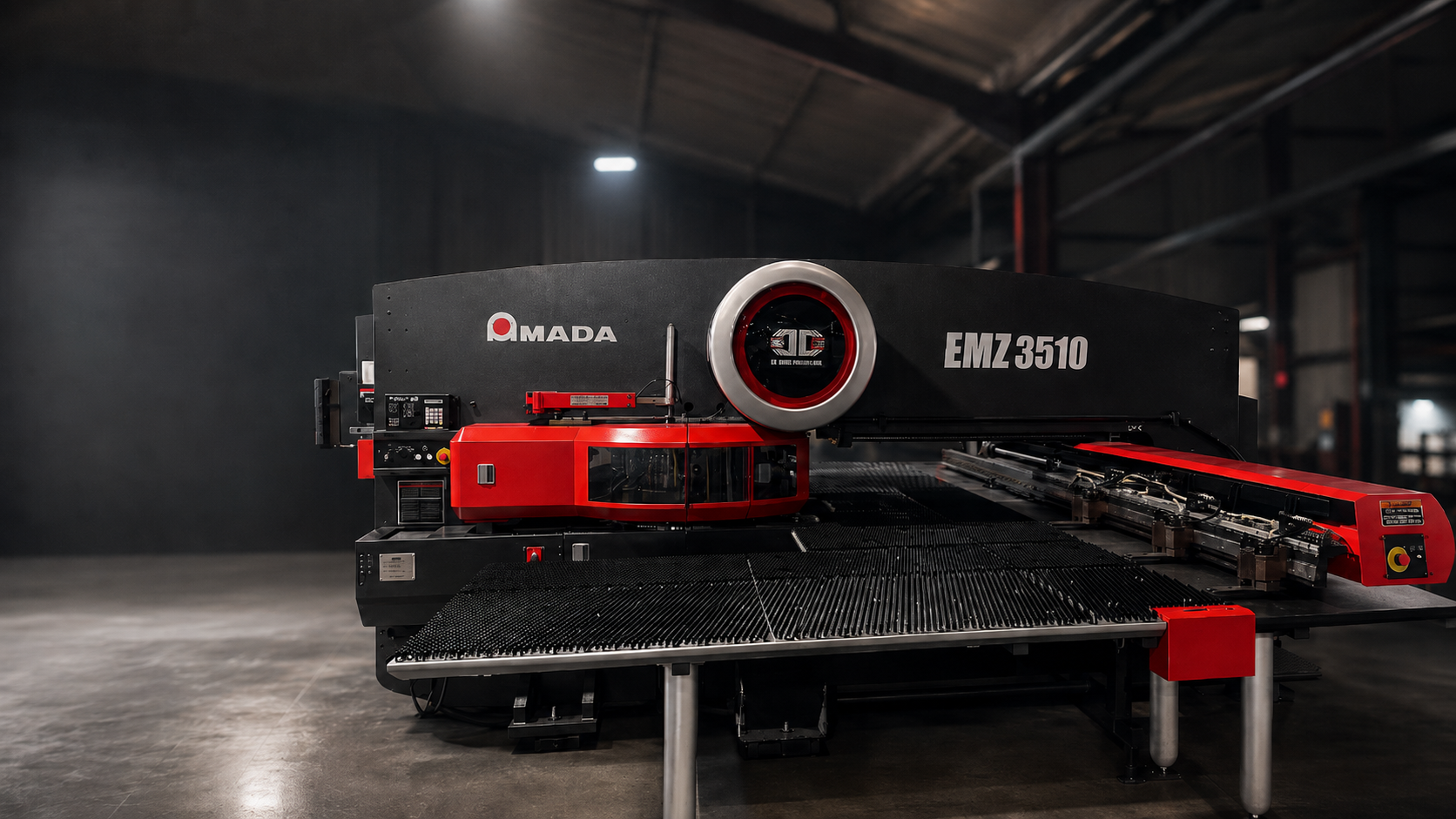
Amada EMZ 3510
30-tonne electric turret punch
5-day standard lead time
Amada EMZ 3510 — 30-tonne electric turret punch at Bolton Sheetmetal Ltd
Amada EMZ 3510 · 30-tonne electric punch
A family trade

The laser gets the headlines. The punch does the work it can't.

Sheet metal has been the family trade since 1979 — Martin started on the shop floor at 14 in his father's business. Bolton Sheetmetal Ltd has carried the craft forward since 2011. The laser is the right tool for clean profiles in thicker material. The punch is the right tool for everything with a feature in it — and a lot of real fabrication work has features.

Our turret punch is a 30-tonne Amada EMZ 3510 — an electric turret press holding ±0.1mm. It punches mild steel up to 3mm, but thickness isn't why you bring work here. You bring it here because it forms louvres, dimples, countersinks and extrusions in the same cycle as the holes; taps threads in the turret; and runs pre-painted material the laser physically can't touch. One setup, finished part.
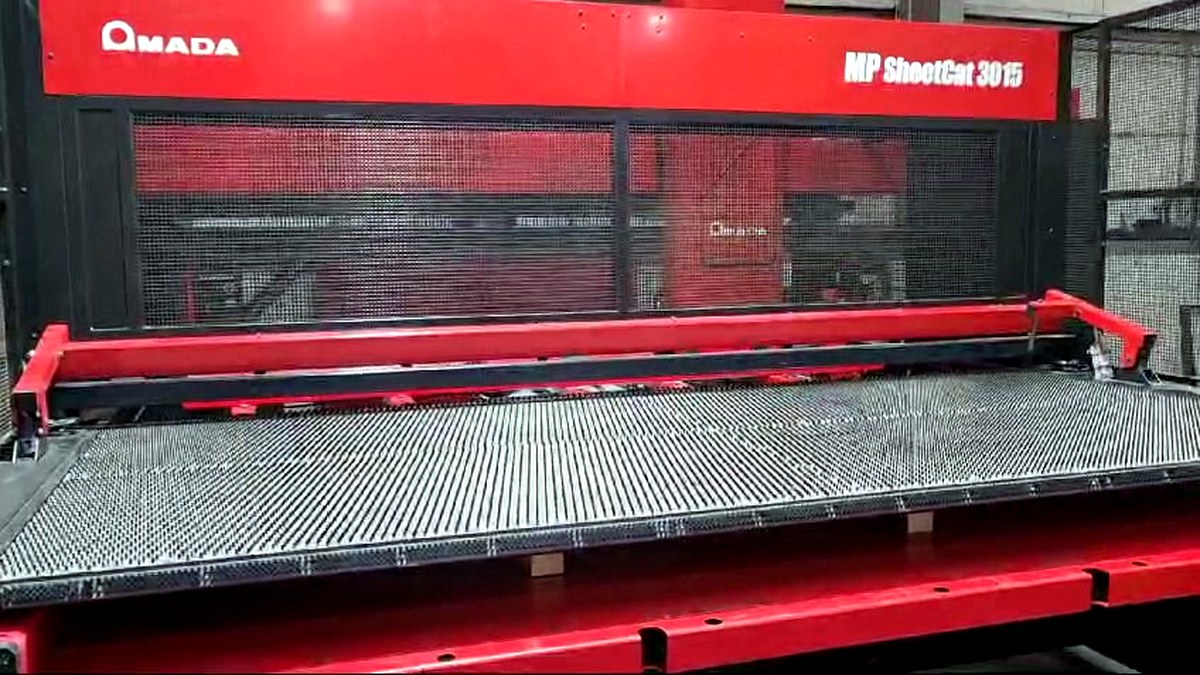
MP SheetCat 3015 — automated load and unload The punch is fed by an MP SheetCat 3015 automation cell: unmanned loading and unloading from a 3,000kg raw-material pallet, mixed sheet formats and types scheduled together, around a 37-second job-exchange cycle. The machine keeps running while parts come off and stock goes on — so the punch isn't sat idle waiting on a pair of hands, and that efficiency comes off your unit price. MP SheetCat 3015 automated load/unload cell
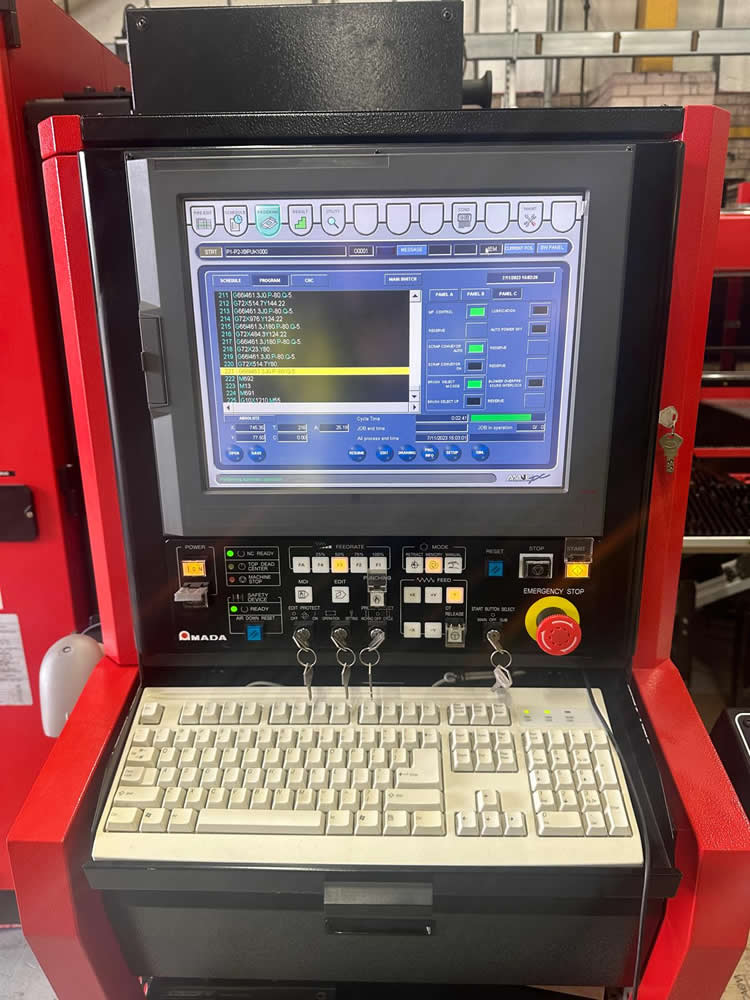
Amada EMZ 3510 control panel — CNC punch program running at Bolton Sheetmetal
Amada EMZ 3510 control panel — program in progress

Whether it's one bracket with a few tapped holes or a production run of pre-painted enclosure panels with louvres formed in, the workflow is the same: drawing check, tooling, punch and form, ready for the next operation.
Capability

CNC punching capabilities.

The numbers that matter on a quote. Send us a job that fits inside these — we'll punch it.

MachineAmada EMZ 3510, 30-tonne electric turret punch
Mild steelUp to 3mm
Punching accuracy±0.1mm
FormingLouvres, dimples, countersinks, extrusions
TappingIn-turret (in the punching cycle) and manual / secondary
Pre-paintedYes — pre-painted and pre-finished sheet
AutomationMP SheetCat 3015 — unmanned load / unload
Lead time5 working days standard
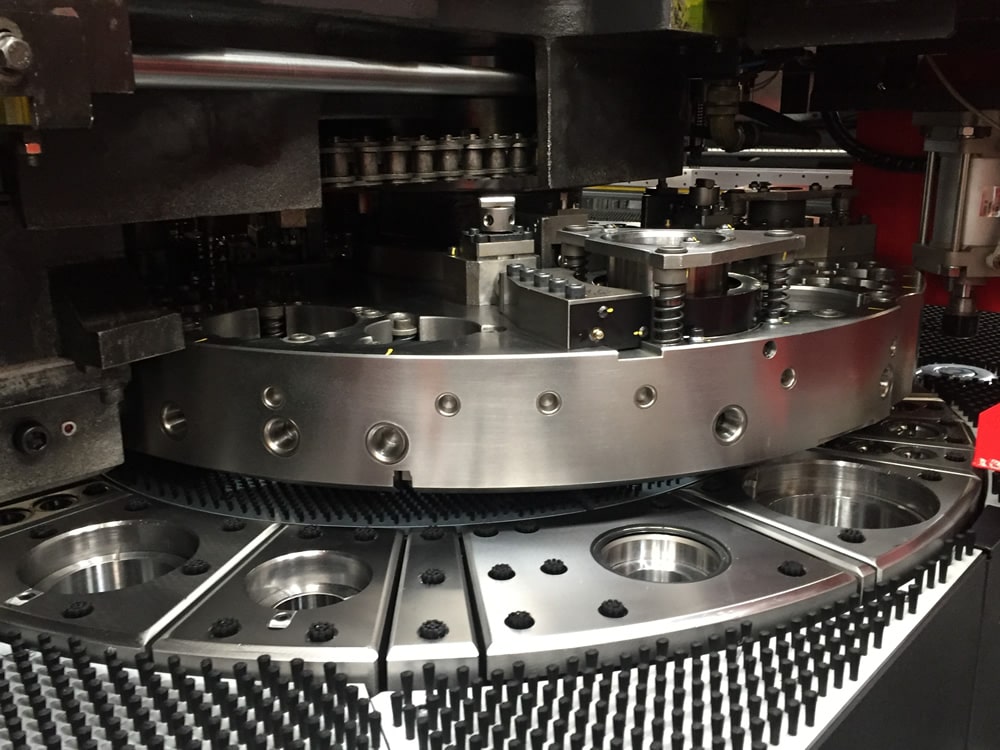
Amada EMZ 3510 turret punch — tool stations loaded with punches and dies
Tool turret — 45-station capacity, ±0.1mm positioning accuracy
What punching adds

Four things the punch does that a laser can't.

This is the honest reason to choose punching. Not thickness — features.

01 / Forming

Louvres, dimples, countersinks, extrusions

A laser only cuts through the sheet. The punch reshapes it. Ventilation louvres in an enclosure, dimples for stand-off, countersinks so a screw sits flush, extrusions to give a tapped hole more thread depth — all formed in the same program as the holes, no second operation.

Same cycleNo secondary op
Formed featuresLouvres · dimples · countersinks
02 / Tapping

Threads, in the turret or by hand

We tap in-turret — threads cut during the punching cycle, so the part comes off ready to assemble — and we also tap manually or as a secondary operation where the job, material or thread calls for it. Either way the holes and the threads are done before the part leaves, not sent out to be tapped elsewhere.

In-turretManual / secondary
Tapped threadsReady to assemble
03 / Pre-painted

Pre-painted and pre-finished sheet

Pre-painted material punches cleanly — the finished surface stays the finished surface. This is work the laser physically can't take on, so if your part starts as pre-painted or pre-finished stock, it comes to the punch. No cutting back to bare metal, no re-finishing.

Finish preservedLaser can't do this
Pre-paintedFinish preserved
04 / Repeat work

Fast, consistent, automated production

The turret and the MP SheetCat automation make the punch the right tool for volume — hundreds of identical perforated, formed or tapped parts, run consistently, with the cell loading and unloading itself. Tooling cost is amortised across the run; unit price drops the more you need.

VolumeAutomated
Production runsConsistent at volume
Perforated punched sheet with formed louvres
Formed, not just cut

Louvres, perforations and forms — in one operation.

Laser or punch?

Not sure which your part needs? Here's the honest split.

We run both, so we've no reason to push you to the wrong one. Send the drawing and we'll put it on whichever machine is right — often it's both.

Choose punching if…

The part needs formed features (louvres, dimples, countersinks, extrusions), tapped threads, is pre-painted, or it's a high-volume repeat run of holes and forms in thinner material.

Choose the laser if…

The part is a clean profile, needs thicker material — mild steel up to 20mm, stainless up to 12mm, aluminium up to 10mm — has complex internal cut-outs, or the edge quality matters more than formed features.

Often it's both

Plenty of parts are laser-profiled then punch-formed, or punched then folded and welded. We run them across whatever machines the job needs — one quote, one delivery, no parts shuttled between suppliers.

For your quote

What to send for a quote.

The faster and clearer the file, the faster the quote — and the more accurate the price.

  • A DXF of the flat part — closed contours, dimensions in millimetres.
  • Formed features called out — louvres, dimples, countersinks, extrusions, with sizes and which face they form to.
  • Tapped holes — thread size and whether they're in-turret or secondary.
  • Material and thickness, including if it's pre-painted or pre-finished.
  • Quantity — and whether this is a one-off or a repeat order.

File formats accepted

DXF DWG STEP IGES PDF Sketch

No DXF? Send a PDF with dimensions, a STEP or IGES file, or a hand sketch. We'll work with what you have.

Why BSM

There are bigger punching shops in the North West.
Here's what BSM brings.

One accountable contact

When you ring us, you get someone who knows your job. No call centres, no account managers shuffling files between sites.

Punch and laser under one roof

Parts that need profiling and forming don't get split between suppliers. We run both machines here, plus the bending and welding after. One quote, one delivery.

The family trade since 1979

Sheet metal runs in the family — started in 1979, carried on by Bolton Sheetmetal Ltd since 2011. Family-run. Debt-free. Still here. And working towards ISO 9001 certification.

Honest lead times

Standard is 5 working days. If we can't hit it, we'll tell you before we quote — not after you've ordered.

FAQ

CNC punching, asked & answered.

When should I choose punching over laser cutting?
Punching wins when the part needs formed features — louvres, dimples, countersinks or extrusions — or threads tapped in, or it's pre-painted material. The laser wins for thicker material and clean profile cutting. If you're not sure, send the drawing and we'll put it on the right machine — often a part uses both.
What's the maximum thickness you can punch?
3mm in mild steel. Thickness isn't the punch's strength — if your part is thicker and profile-based, it's better suited to our in-house laser, which cuts mild steel up to 20mm, stainless up to 12mm and aluminium up to 10mm.
Can you tap threads as part of the punching process?
Yes — both ways. In-turret tapping cuts the threads during the punching cycle so the part comes off ready to assemble. We also tap manually or as a secondary operation where the material, thread or part calls for it. The threads are done before the part leaves us.
Can you punch pre-painted or pre-finished material?
Yes. Pre-painted and pre-finished sheet punches cleanly with the finish preserved. This is work the laser can't take on, so pre-painted parts come to the punch — no cutting back to bare metal, no re-finishing afterwards.
Do you do louvres and other formed features?
Yes — louvres, dimples, countersinks and extrusions, all formed in the same program as the holes. Call the features out on your drawing with sizes and which face they form to, and we'll quote the finished part, not just the flat blank.
Is punching cheaper than laser for my job?
It depends on the part. Punching carries tooling setup that's amortised across the run, so it's strong on volume and on parts with forms or taps. One-offs and thicker profiles are often better on the laser. We'll quote it on whichever is genuinely right — we run both, so there's no reason for us to steer you wrong.
What's your typical lead time?
5 working days for punched parts is standard. Assemblies that go on to bending, welding or finishing take longer — tell us what the job involves and we'll quote a realistic lead time alongside the price.
Ready when you are

Got a part with features in it?

Send us your drawing and we'll come back with a price within the working day. DXF, STEP, PDF or a sketch — whatever you've got.

01204 460542
Mon–Thu 08:00–17:00 · Fri 08:00–16:00