
Up to 3m ~100 tonne Mild steel · 8mm

Press brake bending,
made in Bolton.

CNC folding on two press brakes — a 100-tonne Amada HFE and a servo-electric RSM — turning the parts we laser and punch into finished, ready-to-weld components, without leaving the shop.

Amada HFE + RSM servo-electric
Up to 3m · ~100 tonne
5-day standard lead time
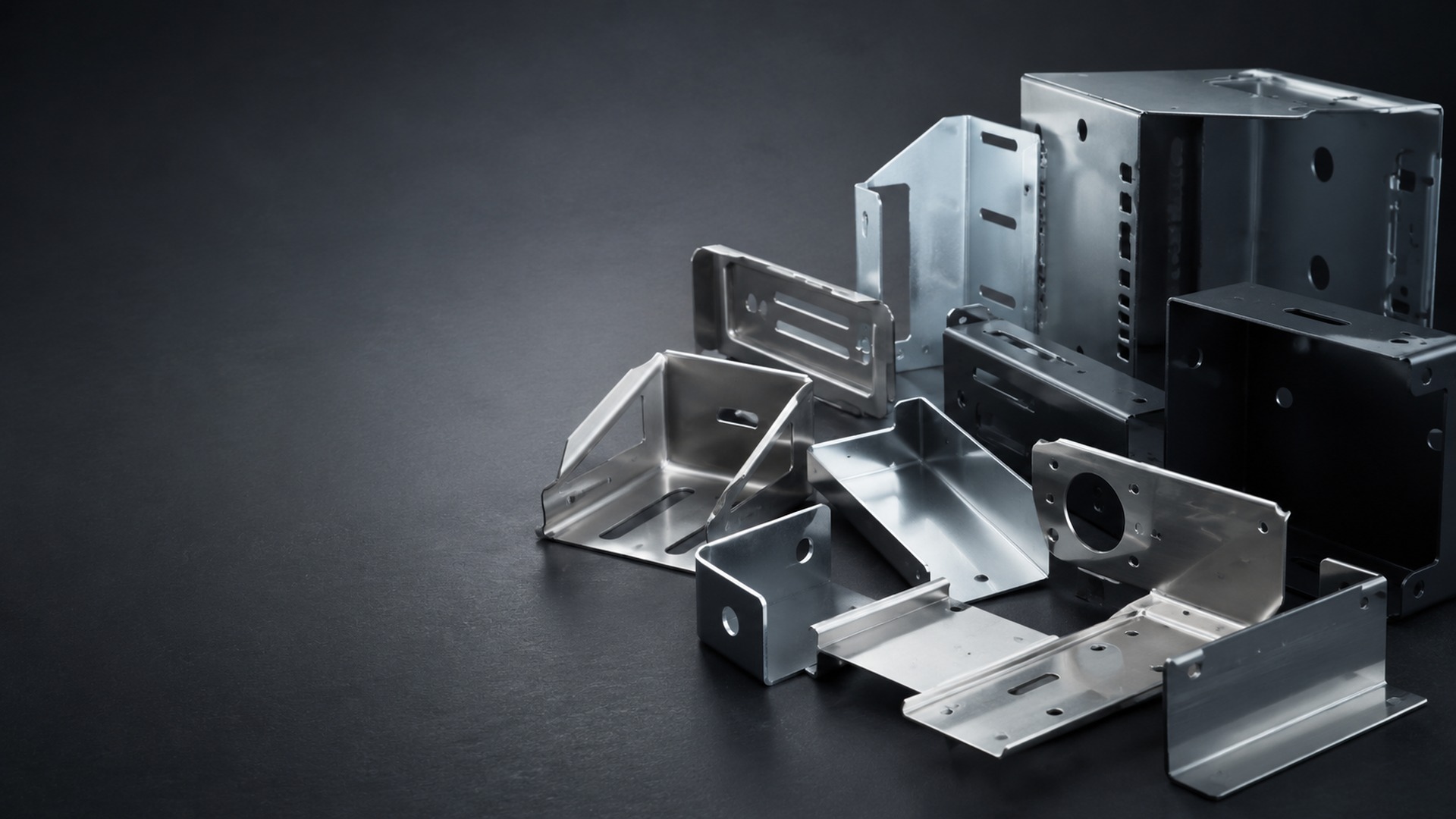
Folded sheet metal brackets and formed components produced at Bolton Sheetmetal Ltd
Amada HFE 100t + RSM EP-3512 · up to 3m
A family trade

A flat part isn't a finished part. This is where it becomes one.

Sheet metal has been the family trade since 1979 — Martin started on the shop floor at 14 in his father's business. Bolton Sheetmetal Ltd has carried the craft forward since 2011. Cutting and punching produce a flat blank. Almost nothing ships flat. Bending is the operation that turns a profile into a bracket, an enclosure, a chassis — and doing it in-house, right after the laser or punch, is the difference between one quote and a chain of subcontractors.

We run two CNC press brakes: a 100-tonne Amada HFE for length and capacity, and a new full-servo-electric RSM EP-3512 — a 6-axis brake holding ±0.01mm at the beam for precise, repeatable work. Between them we fold up to 3m and mild steel to 8mm, with a comprehensive segmented tooling set (V8 through V63 dies, gooseneck and standard punches) for tight returns and awkward profiles. Two brakes means capacity when you need it and a fallback when a machine's tied up — your job isn't stuck behind one queue. Setups are programmed and simulated offline in Radan Radbend before a brake runs, so the bend sequence and tooling are proven on screen — fewer first-off errors, tighter repeatability across a run.

One roof, one quote, one delivery The reason bending matters here isn't just the machines — it's where they sit. Your part is laser cut or punched, walked across the floor, folded, and goes straight on to welding or hardware insertion if it needs it. No parts boxed up and couriered to a folding subcontractor, no second supplier to chase, no tolerance stack-up from work passing through three businesses. One accountable contact from drawing to despatch.

Whether it's a single folded bracket or a production run of enclosures cut, punched, folded and welded as one job, the workflow stays under this roof from drawing check to despatch.
Capability

Press brake bending capabilities.

The numbers that matter on a quote. Tonnage needed rises with bend length, so we confirm thick or long folds against your exact part.

MachinesAmada HFE 100-tonne + RSM EP-3512 servo-electric
Max bend lengthUp to 3m
Max tonnageAround 100 tonne
Mild steelUp to 8mm
ToolingSegmented V8–V63 dies, gooseneck & standard punches
ProgrammingRadan Radbend — offline programmed & 3D simulated
Free-issueYes — we fold blanks we didn't cut
First-offAvailable for production sign-off
Lead time5 working days standard

At 6mm and under, we fold the full 3m in mild steel and aluminium — stainless reduces earlier with thickness. At 8mm we fold all three materials, but length is limited by tooling and tonnage: typically under 1m. Exact bend length for your part is confirmed at quote.

Why it matters

Bending under the same roof as cutting changes the job.

It's not just convenience. It's accuracy, accountability and lead time.

01 / Accuracy

One business owns the tolerance

When the same shop cuts and folds, the bend allowance is accounted for from the start — the flat pattern is developed knowing exactly how it'll be folded. Send a cut part to a separate folder and the tolerance stack-up between two businesses is yours to absorb. Here it isn't.

No stack-upSingle owner
AccuracyOne owner, one tolerance
02 / Capacity

More than one brake

Two brakes means your job isn't sat behind a single machine's queue. Long and heavy work on the 100-tonne Amada HFE, precise and repeat work on the servo-electric RSM running in parallel — capacity when production needs it, and a fallback when a machine's mid-setup.

Parallel runningRedundancy
CapacityTwo press brakes
03 / Repeatability

Offline programmed before the metal moves

Bend sequence and tooling are programmed and simulated in Radan Radbend, away from the machine, before a run starts. Collisions and sequence problems are found on screen, not on your parts. Because Radbend is machine-independent, the same proven program drives either brake — a setup that repeats consistently across a production run.

Simulated firstConsistent run
RepeatabilityProven setups
04 / One quote

Cut, fold, weld — one job

The strongest reason of all: the part doesn't leave. Laser or punch, then fold, then weld or hardware if needed, then despatch — one quote, one delivery, one business accountable for the finished component instead of three.

One deliveryOne contact
One jobCut · fold · weld
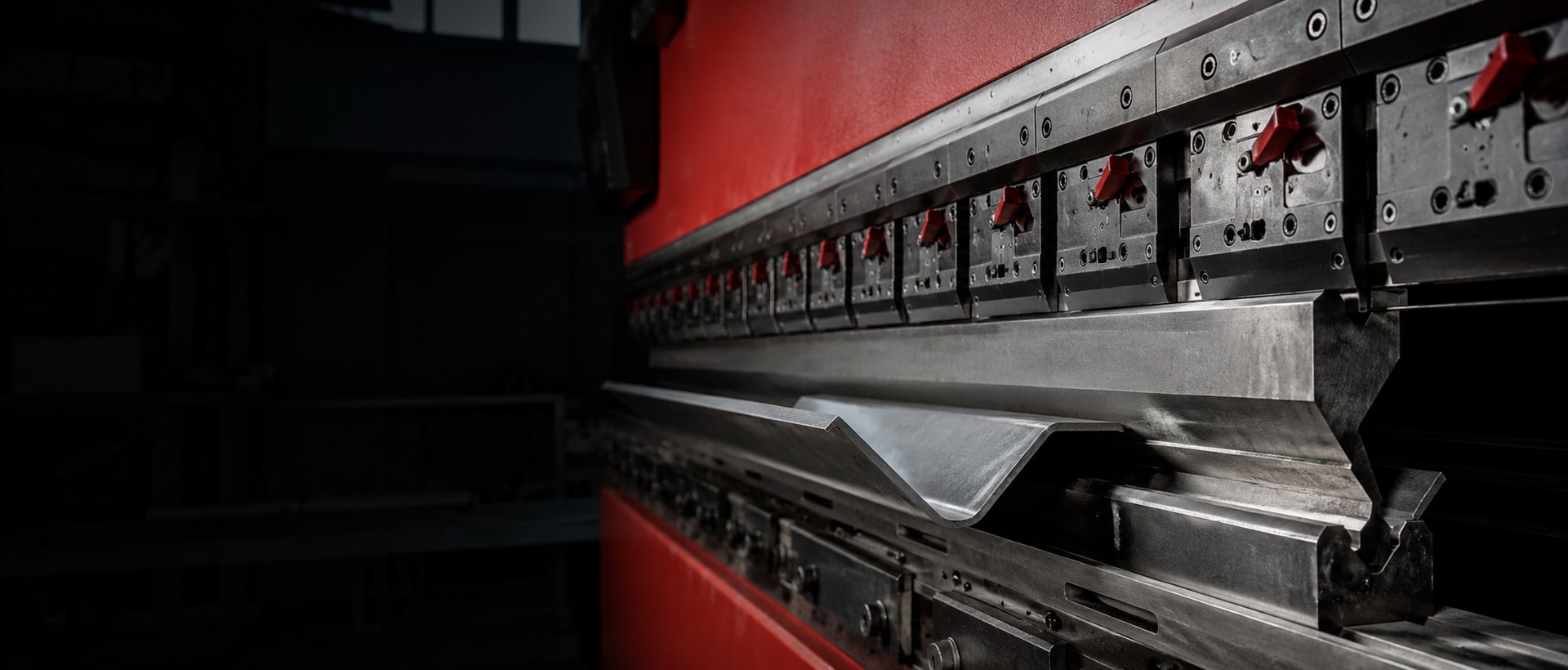
Press brake punch and segmented die tooling forming sheet metal
Tooled for the job

Segmented V8–V63 dies — tight returns to heavy plate.

Part of the line

Bending rarely comes on its own.

Most folded parts start on the laser or punch and finish at welding. Here's where bending sits.

Comes from cutting

Flat blanks profiled on the laser — mild steel up to 20mm, stainless up to 12mm and aluminium up to 10mm — or punched with holes and forms already in.

Folded here

Programmed offline, folded on the right brake for the length and tonnage, first-off checked before a run.

Goes to welding

Folded parts that need joining go straight on to welding and fabrication — same shop, same job, same delivery.

For your quote

What to send for a quote.

The faster and clearer the file, the faster the quote — and the more accurate the price.

  • A 3D model (STEP) of the folded part, or a flat DXF with bend lines and angles marked.
  • Material and thickness, and the internal bend radius if it matters to the part.
  • Critical dimensions — which faces and flanges must be held to tolerance.
  • Whether we're cutting it too, or you're free-issuing flat blanks for folding only.
  • Quantity — and whether this is a one-off or a repeat order.

File formats accepted

STEP DXF DWG IGES PDF Sketch

A 3D STEP of the folded part is ideal — we can unfold it ourselves. No model? A dimensioned drawing or sketch with bend angles works too.

Why BSM

There are bigger fabrication shops in the North West.
Here's what BSM brings.

One accountable contact

When you ring us, you get someone who knows your job. No call centres, no account managers shuffling files between sites.

Cut, fold, weld under one roof

Bending isn't a standalone service here — it's the middle of a line that runs from laser and punch through to welded assembly. One quote, one delivery, no parts lost between subcontractors.

The family trade since 1979

Sheet metal runs in the family — started in 1979, carried on by Bolton Sheetmetal Ltd since 2011. Family-run. Debt-free. Still here. And working towards ISO 9001 certification.

Honest lead times

Standard is 5 working days. If we can't hit it, we'll tell you before we quote — not after you've ordered.

FAQ

CNC bending, asked & answered.

What's the longest part you can bend?
Up to 3m bend length across our press brakes. Longer parts can sometimes be handled in stages depending on geometry — send the drawing and we'll tell you straight whether it's in range.
What thickness can you fold?
Up to 8mm in mild steel, with around 100 tonne available. Tonnage needed rises with bend length — a thick fold over a long part needs more than the same fold over a short one — so for thick or long work we confirm against your exact part at quote stage rather than guess.
Can you bend parts you didn't cut?
Yes. We fold free-issue flat blanks as well as parts we've laser cut or punched ourselves. If we're doing both, the flat pattern is developed knowing how it'll be folded — which removes the tolerance stack-up you'd get splitting the work between two businesses.
How do you keep bends consistent across a production run?
Setups are programmed and simulated offline in Radan Radbend before the brake runs, so the bend sequence and tooling are proven before the metal moves. We can supply a first-off for sign-off, then the run repeats against that proven setup.
Do you need a 3D model?
A 3D STEP of the folded part is ideal — we unfold it ourselves and develop the flat pattern. If you don't have one, a dimensioned drawing or sketch with bend angles and which faces are critical is enough to quote and run.
What's your typical lead time?
5 working days standard for cut-and-folded parts. Assemblies that go on to welding and finishing take longer — tell us the full job and we'll quote a realistic lead time with the price.
Ready when you are

Got parts that need folding?

Send us your drawing and we'll come back with a price within the working day. STEP, DXF, PDF or a sketch — whatever you've got.

01204 460542
Mon–Thu 08:00–17:00 · Fri 08:00–16:00